
When people hear the term home accessibility, they often picture institutional spaces or major renovations. In reality, accessibility is much simpler, and much more personal, than that.
At its core, an accessible home is one that supports how someone actually lives. It reduces physical barriers, improves safety, and makes everyday tasks easier, without sacrificing comfort, style, or independence. Accessibility isn’t about changing who someone is, it’s about making sure their home works with them, not against them.
Accessibility Is About Everyday Living
In a home setting, accessibility refers to how easily and safely a person can enter, move through, and use their living space.
An accessible home:
-
- Is easier to navigate
-
- Reduces the risk of injury
-
- Supports independence
-
- Adapts to different abilities and mobility levels
According to the Centers for Disease Control and Prevention (CDC), environmental hazards in the home are a major contributor to injuries related to mobility and balance challenges, especially falls — many of which are preventable with thoughtful design and safety improvements.
Accessibility does not look the same in every home or for every person. What matters most is usability — how well the home supports a person’s daily routines and physical needs.
Who Is Home Accessibility Designed For?
Home accessibility is often associated only with aging, but it benefits a much broader group of people.
Accessibility improvements can support:
-
- People living with physical disabilities
-
- Individuals with temporary or permanent mobility challenges due to injury or illness
-
- Older adults planning to age in place
-
- Family members and caregivers assisting loved ones
-
- Anyone who wants a safer, more adaptable home environment
The National Institute on Aging (NIA) emphasizes that planning for accessibility early, before safety becomes a concern, can help people remain independent at home longer and reduce the likelihood of injury.
Accessibility vs. Universal Design — What’s the Difference?
Accessibility and universal design are closely related, but they serve slightly different purposes.
Accessibility focuses on meeting specific needs, such as adapting a space to support someone with limited mobility.
Universal design focuses on creating environments that work well for as many people as possible, regardless of age or ability.
Organizations such as the Center for Universal Design note that features like wider pathways, improved lighting, and easy-to-use fixtures benefit everyone, not just individuals with disabilities. Many accessible homes naturally incorporate universal design principles.
Common Features of an Accessible Home
Accessible homes don’t rely on one single feature. Instead, they use a combination of design choices that reduce physical strain and improve safety.
Clear Pathways and Open Circulation
Open layouts and uncluttered pathways make it easier to move through the home safely and accommodate mobility aids such as walkers and wheelchairs.
Safe and Easy Entryways
Step-free entrances, stable walking surfaces, and low thresholds reduce trip hazards and make coming and going safer. This includes accessibility features such as ramps, vertical platform lifts, and bathtub cut outs.
Bathrooms Designed for Stability and Ease
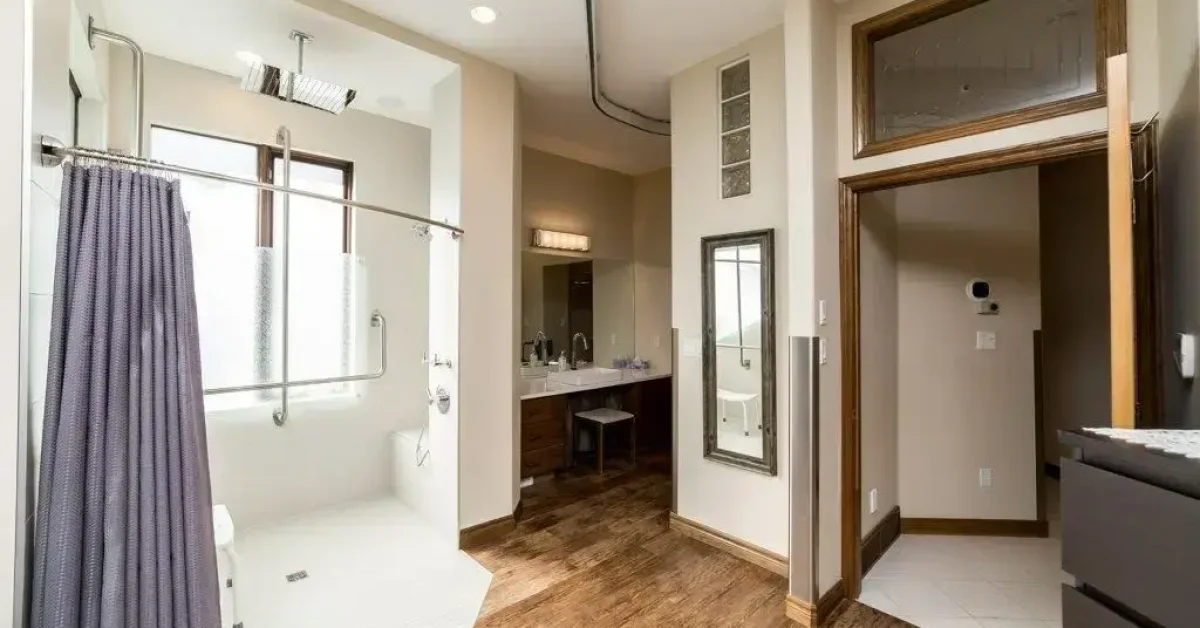
Bathrooms are one of the most common areas where accessibility improvements are needed. The CDC identifies bathrooms as a high-risk area for slips and falls due to wet surfaces and limited space. Adding grab bars, anti-fall bathroom tiles, bath mats, and walk-in showers are just a few ways to make a bathroom more accessible.
Proper Lighting and Visibility
Adequate lighting improves visibility, depth perception, and hazard awareness- especially in hallways, stairs, and bathrooms.
Easy-to-Use Fixtures and Controls
Controls that are easy to reach and operate can reduce strain and improve comfort during daily activities.
These features can often be incorporated in subtle ways that blend naturally into the home’s design.
Accessibility Is Not “One Size Fits All”
There is no single checklist that applies to every household. Accessibility should always reflect the individual living in the home.
Important factors include:
-
- Whether mobility challenges are temporary or long-term
-
- How frequently certain spaces are used
-
- Balance, strength, and endurance
-
- Personal routines and preferences
The U.S. Department of Housing and Urban Development (HUD) emphasizes that effective accessibility planning focuses on functional needs rather than labels or assumptions about ability.
Why Accessibility Supports Independence — Not Dependence
One common misconception is that accessibility takes away independence. In reality, the opposite is true and accessibility often preserves it.
Well-designed accessibility improvements:
-
- Reduce reliance on others for daily tasks
-
- Increase confidence and comfort at home
-
- Lower the risk of injury
-
- Support long-term independence
Research consistently shows that safer home environments help people maintain autonomy and quality of life longer.
When to Consider Accessibility Improvements
Accessibility changes don’t have to wait for a major incident. In fact, proactive planning often leads to better outcomes and less stress.
It may be time to consider accessibility improvements if:
-
- Certain areas of the home feel difficult or unsafe to use
-
- Mobility has changed, even slightly
-
- Recovery from injury is taking longer than expected
-
- Planning for long-term independence is a priority
The National Council on Aging (NCOA) notes that addressing safety risks early can significantly reduce the likelihood of serious injury later on.
Homeowners who choose to make their space accessible proactively can take pride in having a home setup for a variety of guests to be more comfortable. It also provides reassurance that they are better prepared for expected or unexpected mobility challenges residents may face in the future.
How This Fits Into the Bigger Picture of Home Accessibility
Accessibility is part of a broader approach to creating safe, supportive living environments. Some homeowners make gradual updates, while others plan more comprehensive improvements based on long-term needs.
For a broader look at how accessibility improvements support people with mobility challenges throughout the home, see our full guide on home accessibility improvements for people with mobility challenges.
Accessibility Is About Living Well at Home
An accessible home is not about limitations, it’s about possibilities. By reducing barriers and supporting daily routines, accessibility helps people stay safe, comfortable, and independent in the place they call home.
Accessibility doesn’t have to happen all at once. Even small, thoughtful changes can make everyday life easier and more enjoyable.